

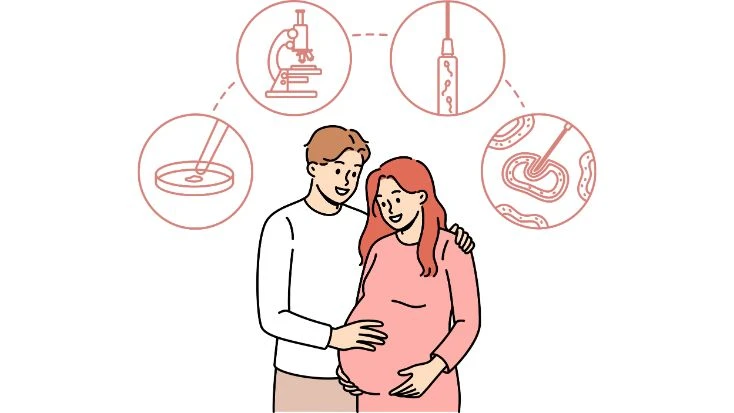
Many couples dream of starting a family, but sometimes pregnancy does not happen as expected.
In such situations, fertility treatments can offer hope. Two of the most common fertility treatments are IUI (Intrauterine Insemination) and IVF (In Vitro Fertilization).
While both treatments help couples achieve pregnancy, they work in different ways. Understanding the difference between IVF vs IUI can help you make the right decision with the guidance of a fertility specialist.
In this blog, Dr. Aradhya Achuri, Fertility Expert in Hyderabad, explains how IUI and IVF work, who can benefit from each treatment, and how to choose the right option.
What is IUI?
IUI (Intrauterine Insemination) is a simple fertility treatment where specially prepared healthy sperm is placed directly into the uterus during ovulation. This increases the chances of the sperm meeting the egg naturally.
The procedure is quick, almost painless, and usually completed in a few minutes without surgery.
Doctors may recommend IUI with or without fertility medicines depending on the patient's condition.
What is IVF?
IVF (In Vitro Fertilization) is a more advanced fertility treatment.
During IVF, the ovaries are stimulated using fertility injections to produce multiple eggs. These eggs are collected through a minor procedure and fertilized with sperm in a laboratory. Once healthy embryos develop, one embryo is transferred into the uterus to achieve pregnancy.
Since fertilization happens outside the body, IVF gives fertility specialists greater control over the entire process.
IVF vs IUI: Key Differences
Although both treatments aim to help couples conceive, there are important differences.
| Feature | IUI | IVF |
|---|---|---|
| Procedure |
Sperm is placed inside the uterus |
Eggs are fertilized in the laboratory |
| Complexity | Simple and minimally invasive | Advanced fertility treatment |
| Time Required | One menstrual cycle | Around 2–5 weeks |
| Cost | Lower | Higher |
| Success Rate | Lower than IVF | Higher, especially in complex infertility cases |
|
Number of Clinic Visits |
Few | More frequent monitoring |
When comparing IVF vs IUI success rates, IVF generally provides better pregnancy chances, especially when infertility is caused by blocked fallopian tubes, severe male infertility, or advanced maternal age.
Who is a Good Candidate for IUI?
IUI is often recommended as the first fertility treatment for couples with mild fertility problems.
You may be a suitable candidate if you have:
- Mild male infertility
- Irregular ovulation
- Unexplained infertility
- Mild cervical problems
- Need for donor sperm
- Healthy fallopian tubes
Since IUI is less invasive and more affordable, many fertility specialists recommend trying a few IUI cycles before moving to IVF if appropriate.
Who Should Consider IVF?
IVF may be a better option when fertility problems are more complex or when previous treatments have not worked.
Doctors usually recommend IVF for:
- Blocked or damaged fallopian tubes
- Severe male infertility
- Endometriosis
- Poor ovarian reserve
- Advanced maternal age
- Repeated failed IUI cycles
- Couples requiring genetic testing before pregnancy
Because IVF bypasses several natural barriers to fertilization, it offers higher pregnancy success for many couples.
IVF vs IUI Success Rates
One of the biggest differences between IVF vs IUI is the success rate.
IUI success depends on several factors, including:
- Woman's age
- Egg quality
- Sperm quality
- Ovulation
- Cause of infertility
On average, IUI has lower pregnancy rates per cycle than IVF.
IVF offers higher success because:
- Fertilization is carefully monitored in the laboratory.
- Healthy embryos can be selected for transfer.
- Advanced techniques can improve outcomes.
- Genetic testing may be performed when needed.
However, success rates vary from person to person. A fertility specialist can recommend the best treatment based on your medical history.
Cost and Time Commitment
Cost is another important factor while choosing fertility treatment.
IUI
- Lower treatment cost
- Fewer clinic visits
- Less medication
- No surgery
- Short recovery time
IVF
- Higher treatment cost
- More frequent monitoring
- Fertility injections required
- Egg retrieval procedure
- Embryo transfer
- Slightly longer treatment duration
Although IVF costs more initially, its higher success rate may reduce the number of treatment cycles needed.
Risks and Side Effects
Both treatments are generally safe when performed by experienced fertility specialists.
IUI Risks
Possible side effects include:
- Mild cramping
- Light spotting
- Temporary discomfort
- Multiple pregnancy if fertility medicines produce multiple eggs
IVF Risks
Possible side effects include:
- Bloating
- Mild abdominal pain
- Bruising from injections
- Mood changes
- Ovarian Hyperstimulation Syndrome (OHSS) in rare cases
- Mild discomfort after egg retrieval
Your fertility specialist will closely monitor every step to minimize risks.
How to Choose Between IVF and IUI
There is no single treatment that is best for everyone.
The right option depends on several factors, including:
- Your age
- Cause of infertility
- Duration of infertility
- Previous fertility treatments
- Budget
- Overall reproductive health
- Family planning goals
Some couples begin with IUI and later move to IVF if pregnancy does not occur. Others may benefit from starting IVF immediately because of their medical condition.
A fertility specialist can help you choose the most suitable treatment after a complete fertility evaluation.
Conclusion
When comparing IVF vs IUI, both treatments have helped thousands of couples become parents. IUI is usually the first choice for mild fertility problems because it is simple, less expensive, and minimally invasive. IVF is a more advanced treatment that offers higher pregnancy success, especially in complicated infertility cases.
If you have been trying to conceive without success, consulting an experienced fertility specialist is the best next step.
Dr. Aradhya Achuri, Fertility Expert in Hyderabad, provides personalized fertility evaluation and advanced fertility treatments to help couples choose the right path toward parenthood.
Frequently Asked Questions (FAQs)
1. Which is better, IVF or IUI?
Neither treatment is better for everyone. IUI is suitable for mild fertility problems, while IVF is recommended for more complex infertility cases. Your fertility specialist will suggest the best option based on your condition.
2. What are the IVF vs IUI success rates?
In general, IVF has higher success rates than IUI because fertilization takes place in a controlled laboratory environment. However, success depends on age, egg quality, sperm quality, and overall reproductive health.
3. Is IUI less expensive than IVF?
Yes. IUI is usually much more affordable than IVF because it involves fewer medications, fewer procedures, and fewer clinic visits.
4. How many IUI cycles should I try before IVF?
Many fertility specialists recommend trying around 3 to 6 IUI cycles before considering IVF, depending on your age and fertility diagnosis.
5. Is IVF painful?
Most parts of IVF are well tolerated. Egg retrieval is performed under sedation, so patients usually do not feel pain during the procedure. Mild discomfort afterward is common.
6. Can IVF work after failed IUI?
Yes. Many couples achieve pregnancy through IVF after unsuccessful IUI cycles. IVF often provides higher success rates in such cases.
7. When should I see a fertility specialist?
You should consult a fertility specialist if:
- You are under 35 and have been trying to conceive for over one year.
- You are over 35 and have been trying for six months.
- You have irregular periods, PCOS, endometriosis, blocked fallopian tubes, or male fertility issues.