

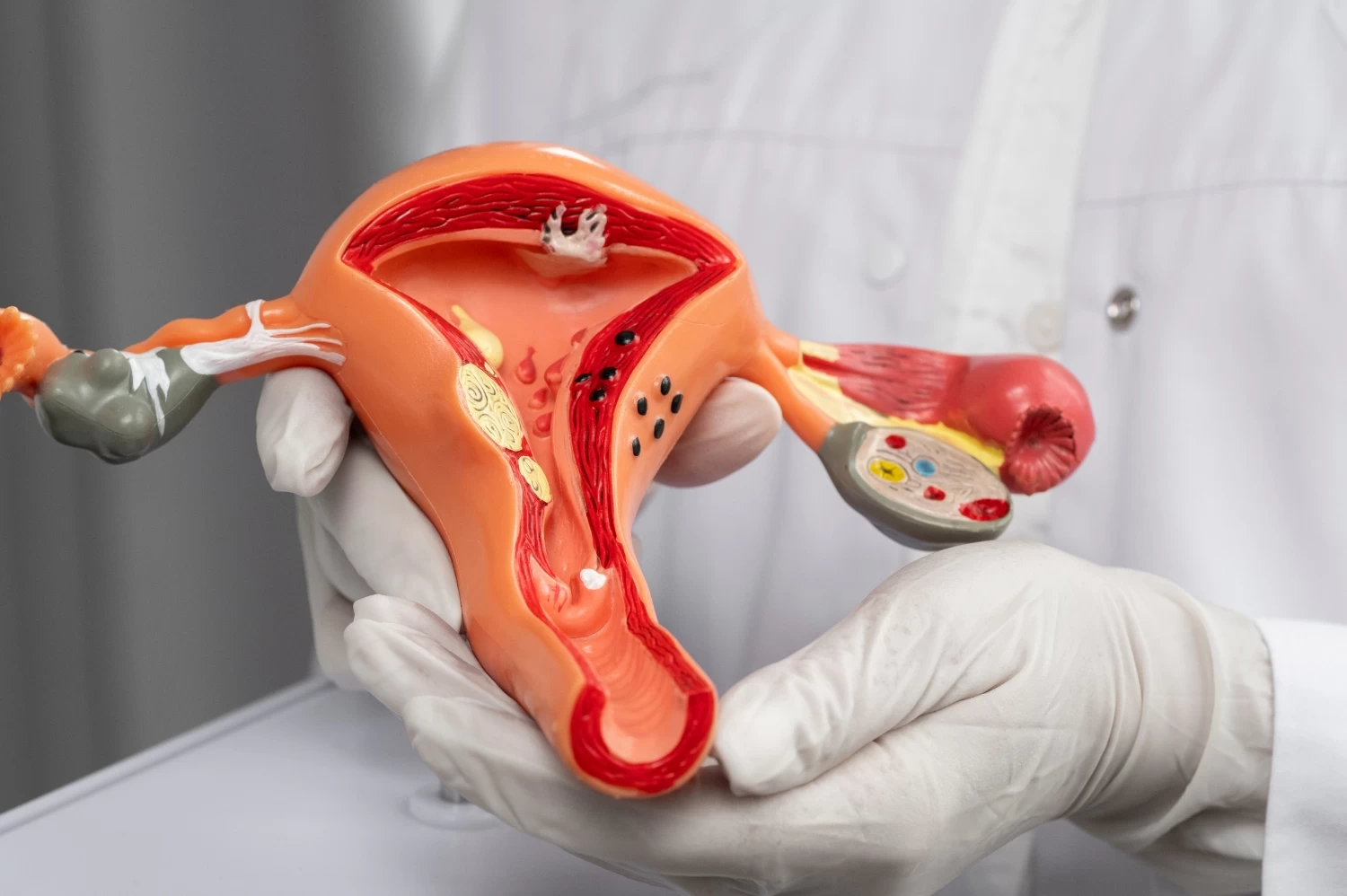
Endometrial PRP explained—why it’s done, who needs it, and how it may help improve implantation and fertility outcomes.
How Endometrial PRP Works
Endometrial PRP uses growth-factor-rich plasma taken from a small sample of your blood.
After the blood is processed in a centrifuge, the concentrated PRP is gently introduced into the uterus using a thin catheter.
These growth factors help the uterine lining grow thicker, healthier, and more receptive for embryo implantation.
The procedure is simple, painless, and takes less than 2 minutes. All you need to do is lie down for 15minutes after procedure. You can resume regular activities immediately after the treatment.
Subendometrial PRP is given in resistant cases , where a thin needle is used to inject the PRP under hysteroscopic guidance, directly into the endometrial layer for better absorption and action.
Benefits of Endometrial PRP Treatment
Endometrial PRP provides natural healing and repair for women with fertility challenges.
It helps increase endometrial thickness, improves blood flow, and supports healthy tissue regeneration.
For women who have experienced recurrent IVF failures or poor implantation, PRP can improve pregnancy chances by enhancing the overall quality of the endometrium.
The treatment is drug-free, minimally invasive, and has no major side effects since it uses your own blood.
Procedure of Endometrial PRP
Endometrial PRP begins with a consultation to understand issues like thin lining, failed implantations, or previous IVF cycle outcomes.
A small amount of blood is then collected, similar to a routine test.
The blood is processed to separate the platelet-rich plasma, which contains powerful growth factors.
Once ready, the PRP is infused into the uterus through a soft catheter to directly improve the lining.
The PRP starts working within days, helping the tissue heal, thicken, and become more receptive for embryo transfer in the following cycle.
When Is Endometrial PRP Recommended?
This treatment is recommended for women who face difficulty achieving a thick, healthy uterine lining during IVF cycles.
It is also suitable for women with recurrent implantation failure, unexplained IVF failures, endometrial atrophy, intrauterine adhesions, or conditions such as Asherman’s syndrome.
Women with chronic thin endometrium that does not respond to routine medication often benefit significantly from PRP therapy.
It can also be used when other fertility treatments have shown limited results.
Success Rate of Endometrial PRP
The success of Endometrial PRP depends on the cause and severity of the condition, but many women see noticeable improvements within the same cycle.
Endometrial thickness often increases within 3–7 days of treatment, and receptivity improves within 2–4 weeks.
For women with recurrent implantation failure, PRP has been shown to improve embryo implantation and pregnancy rates.
In cases of endometrial atrophy or fibrosis, the effects can last several months, and repeated sessions may further enhance results.