

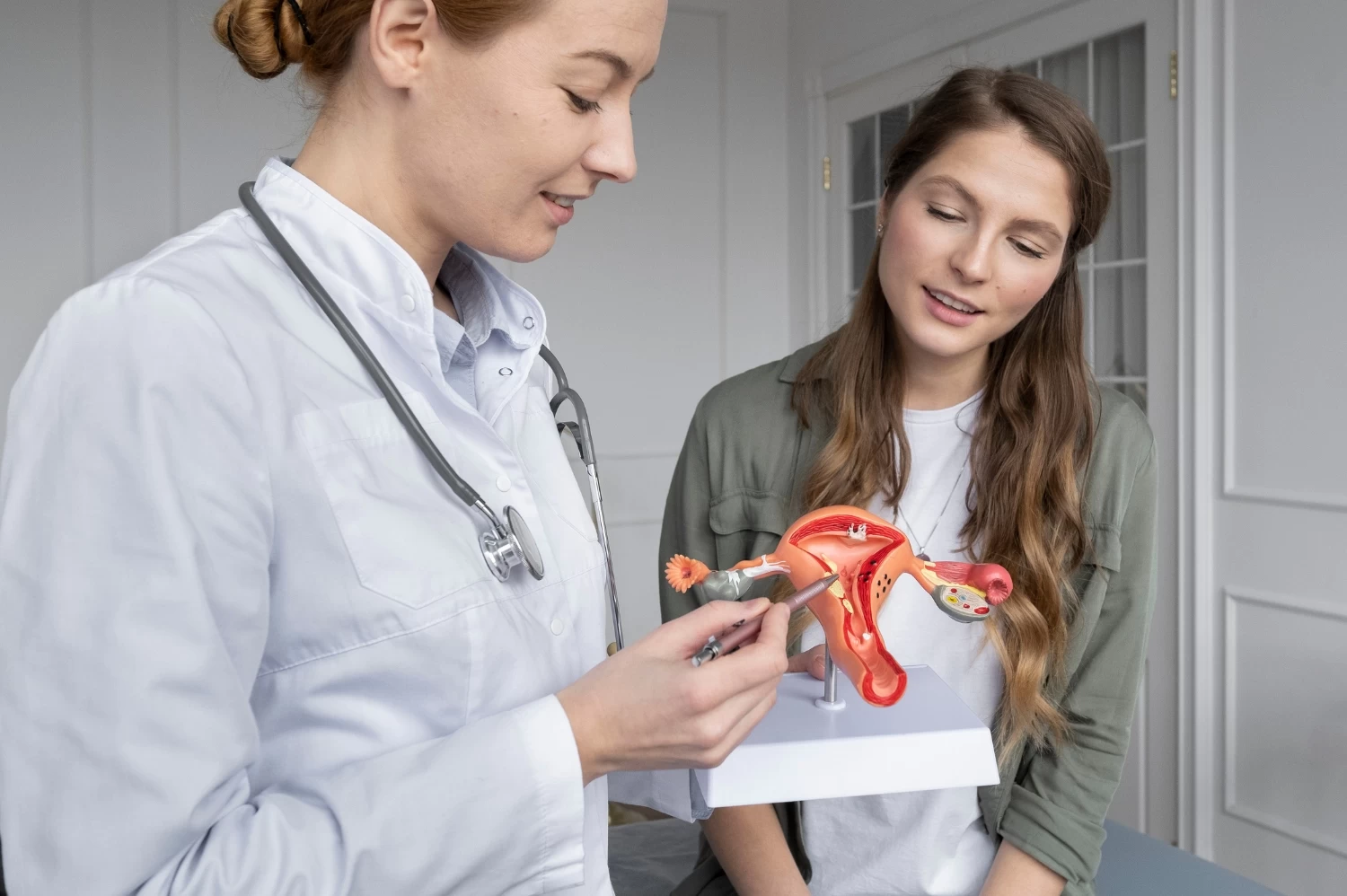
Ovarian PRP explained—can it improve egg quality and ovarian response? Understand who may benefit and when it’s advised.
How Ovarian PRP Works?
Ovarian PRP uses concentrated plasma rich in growth factors taken from the patient’s own blood.
After a small blood sample is collected, it is processed in a centrifuge to separate the platelet-rich portion. This PRP is then gently injected into the ovaries under ultrasound guidance/laparoscopy.
The growth factors present in PRP help rejuvenate ovarian tissue, support follicular development, and may improve the quality and quantity of eggs. By creating a healthier ovarian environment, Ovarian PRP aims to enhance natural fertility and improve the chances of success during IVF or other fertility treatments.
Benefits of Ovarian PRP Treatment
Ovarian PRP offers hope for women who have been told they have poor egg reserve or low ovarian function.
It may help improve ovarian activity, support better follicle response, and increase the chances of producing good-quality eggs.
The treatment is minimally invasive, uses the patient’s own blood, and carries minimal risk.
Many women choose Ovarian PRP when they are preparing for IVF, facing repeated cycle failures, or looking for an option that supports ovarian rejuvenation naturally.
Procedure of Ovarian PRP
The procedure begins with a short consultation to understand medical history, fertility challenges, and ovarian health.
A small blood sample is collected and processed to prepare the PRP.
Once ready, the PRP is injected directly into the ovaries using an ultrasound-guided method/Laparoscopy.After the procedure, the doctor monitors ovarian response through blood tests and ultrasound scans in the following weeks or during the next IVF cycle.
When Is Ovarian PRP Recommended?
Ovarian PRP may be recommended for women who have low ovarian reserve, poor response to stimulation, or age-related fertility decline.
It is often considered for women with low AMH, poor egg quality, early or premature ovarian insufficiency, or repeated IVF failures.
Women in their late 30s or early 40s who wish to improve their ovarian function before treatment may also benefit.
A fertility specialist will evaluate whether PRP can support better outcomes based on individual health and fertility goals.
Success Rate of Ovarian PRP
The success of Ovarian PRP depends on the patient’s age, ovarian reserve, and overall health.
Many women experience improved hormone levels, better follicle growth, and enhanced response during fertility treatment after PRP.
Some studies suggest that ovarian rejuvenation through PRP may support improved egg quality and increase the chances of achieving pregnancy naturally or through IVF.
Although results can vary, Ovarian PRP has shown encouraging outcomes, especially for women with diminished ovarian reserve.
Is Ovarian PRP Right for You?
Ovarian PRP may be suitable if you have low AMH, poor ovarian response, or have faced challenges during previous IVF cycles.
It offers a natural, safe, and minimally invasive way to support ovarian rejuvenation using your own blood.
A consultation with Dr. Aradhya Achuri can help determine whether this treatment can improve your fertility journey and support your chances of conceiving.