

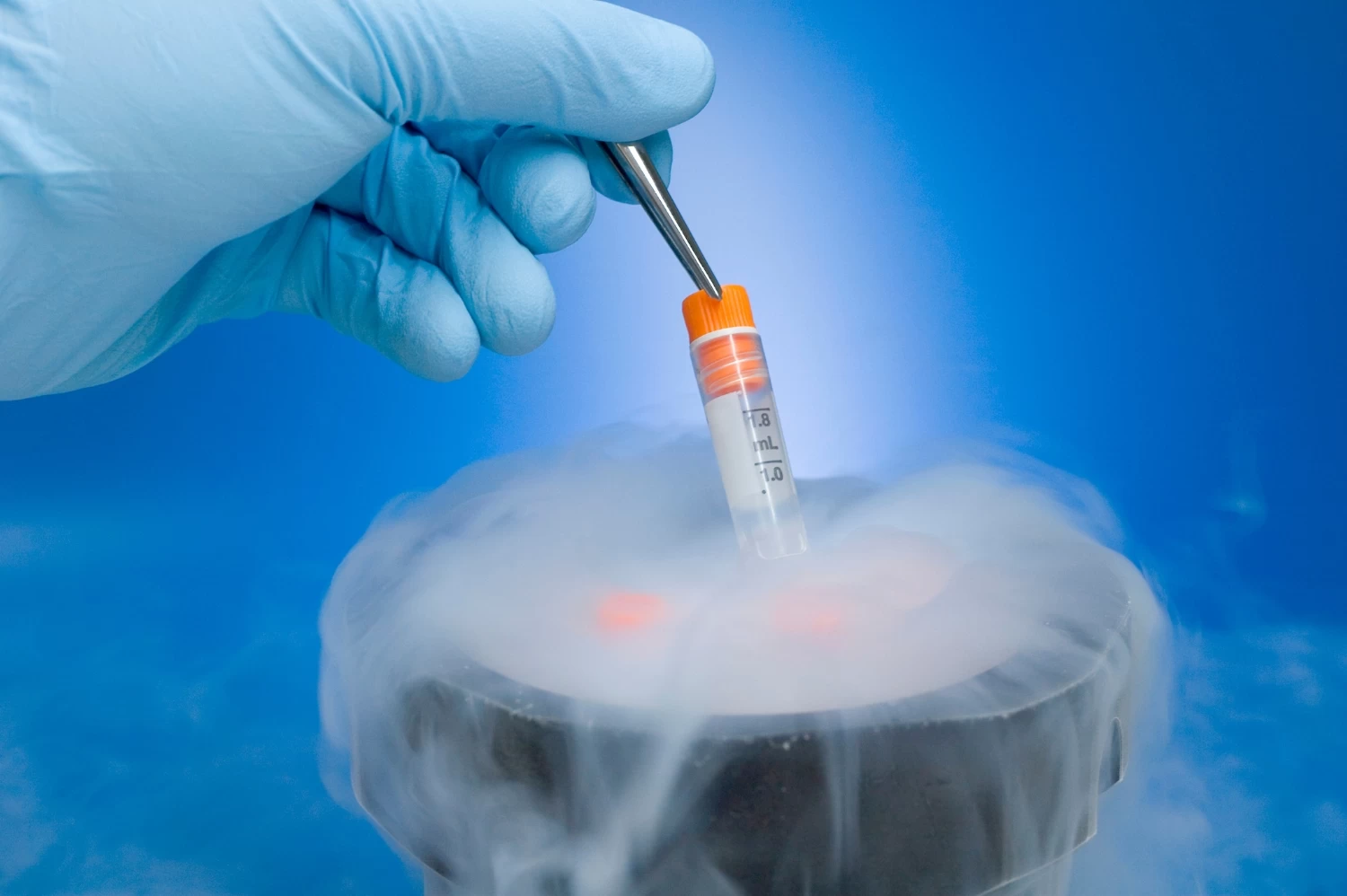
Thinking about egg freezing? Discover the right age, benefits, and what doctors consider before recommending the procedure.
How Egg Freezing Works
Egg freezing begins with a detailed evaluation of ovarian reserve. This includes blood tests to check hormone levels and an ultrasound to assess the number of follicles in the ovaries. These tests help determine how the ovaries will respond to stimulation.
Once the evaluation is complete, the woman starts ovarian stimulation. Hormonal injections are given for several days to help produce multiple mature eggs. During this period, the doctor monitors the growth of the follicles through scans and blood tests.
When the eggs reach the ideal size, a minor egg retrieval procedure is performed. This is done under sedation, and a thin needle is used to collect the eggs from the ovaries.
The collected eggs are examined in the lab, and only mature, healthy eggs are frozen using a fast-freezing method called vitrification.
Vitrification helps protect the eggs from damage and allows them to remain safely stored for future use.
Benefits of Egg Freezing
-
Preserves fertility for women who want to delay pregnancy due to personal, professional, or health reasons.
- Offers a reliable option for women facing cancer treatments that may affect fertility.
- Helpful for women with a family history of early menopause or genetic conditions affecting ovarian reserve.
- Provides peace of mind for women who want to plan parenthood at a later age.
- Increases the chances of a healthy pregnancy in the future, using younger and better-quality eggs.
- Allows women to freeze eggs before undergoing surgeries that may impact the ovaries.
Egg freezing provides flexibility and gives women more choices when planning a family, especially when future fertility is uncertain.
Procedure of Egg Freezing
Egg freezing is a structured process designed to safely collect and store eggs.
It starts with ovarian reserve testing, followed by hormonal stimulation to encourage the ovaries to produce multiple eggs. During the stimulation phase, regular monitoring helps ensure the follicles are growing properly.
Once the follicles reach maturity, the eggs are retrieved in a short procedure. The retrieved eggs are then evaluated, and those that are mature are frozen through vitrification and stored securely.
When the woman decides to use her frozen eggs, they are thawed, examined, and fertilized using ICSI, where a single sperm is injected into each egg. The fertilized eggs grow into embryos, which can then be transferred to the uterus to achieve pregnancy.
This step-by-step method helps maximize the chance of a future pregnancy using the stored eggs.
When Egg Freezing Is Recommended
Egg freezing is recommended in several situations, such as:
- Women undergoing chemotherapy or radiation therapy.
- Women with ovarian disorders or conditions that may reduce egg quality over time.
- Women at risk of premature ovarian failure or early menopause.
- Those who wish to preserve fertility for personal or social reasons.
- Women who are not ready to start a family but want to secure younger eggs for future use.
For many women, egg freezing becomes an important part of long-term family planning.
Success Rate
The success of egg freezing depends on the age at which the eggs were frozen and the total number of eggs stored.
Eggs frozen at a younger age generally have a higher chance of surviving the thawing process, fertilizing successfully, and developing into healthy embryos.
Success rates can vary, but egg freezing gives women an opportunity to use eggs that were collected at their most fertile stage.