

Understand sperm freezing, its benefits, who needs it, and how the process works. A clear guide for men planning fertility preservation.
How Sperm Freezing Works
The process starts with a basic semen analysis to check the sperm count, movement, and overall quality.
After the sample is collected, the lab carefully proccesses it to remove the debris and dead sperms. These are then combined with a protective solution and frozen using a special quick-cooling method.
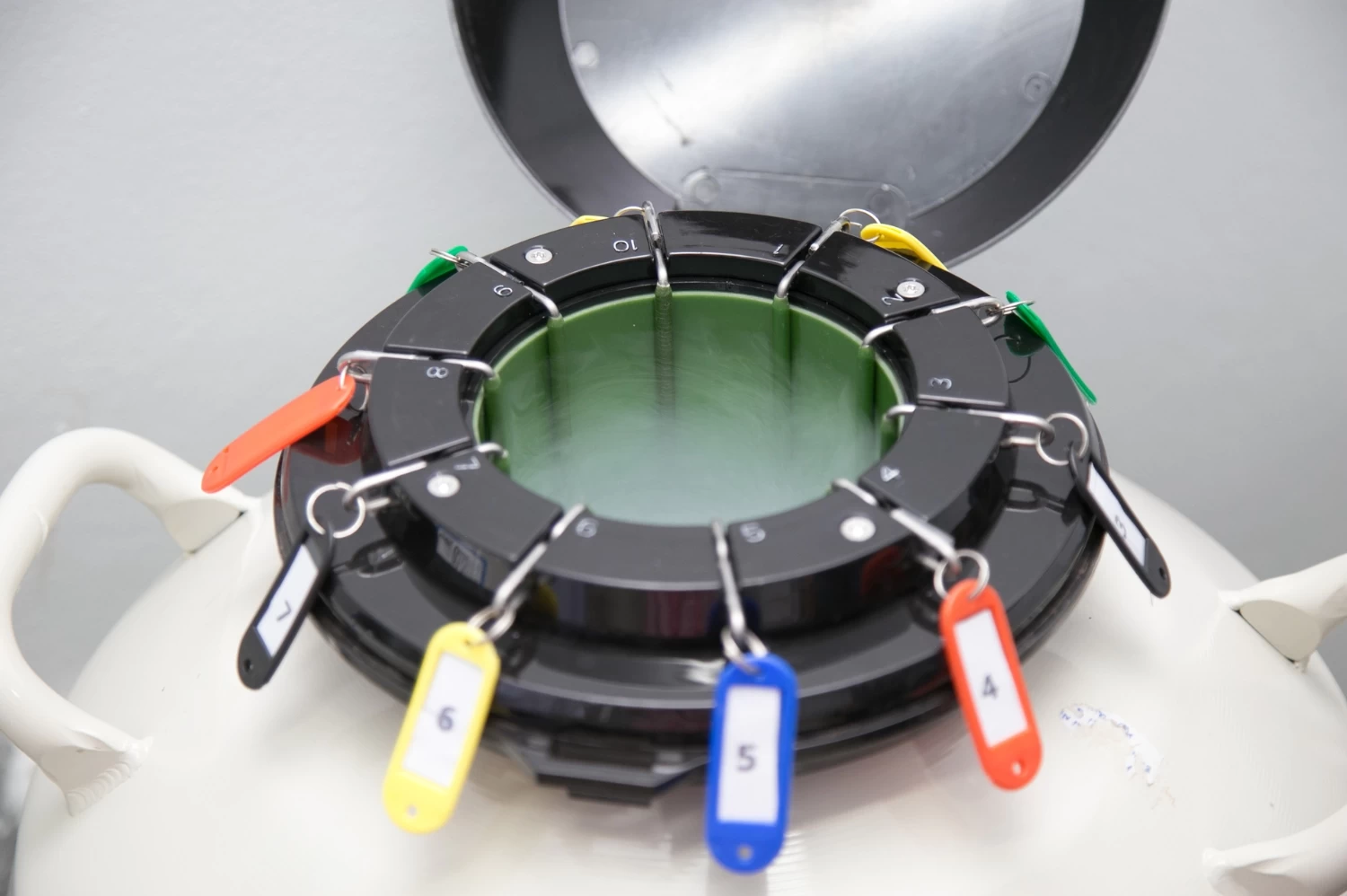
Once frozen, the sperm is stored in liquid nitrogen, where it stays safe for many years without losing its ability to fertilize an egg.
Whenever needed, the sperm can be thawed and used in fertility treatments like IUI or IVF.
This simple method gives long-term security and keeps the sperm in good condition for future use.
Benefits of Sperm Freezing
Sperm freezing can be extremely helpful in many situations, such as:
- Protecting fertility before chemotherapy, radiation, or major surgeries
- Helping men whose fertility may reduce due to medical conditions or hormonal issues
- Supporting individuals working in high-risk jobs involving chemicals, heat, or radiation
- Allowing men to delay fatherhood due to personal or professional reasons
- Preserving fertility before a planned vasectomy
- Helping men experiencing fertility issues by storing sperm when quality is better
- For pooling of sperms in cases of low sperm count before IUI
- Freezing can be done before hand for men who are anxious and can not give sample on d day of IUI
Sperm freezing gives peace of mind and helps men stay in control of their family planning choices.
Procedure: Step-by-Step
The sperm freezing process is simple and done under the guidance of a fertility specialist.
-
Consultation & Semen Test – The doctor checks sperm health and explains the process.
-
Sperm Collection – Usually done naturally. Vibrator can be used when there is difficulty in giving sample. In special cases, sperm may be retrieved directly from the testes using procedures like PESA or TESE.
-
Lab Preparation – The healthiest sperm are selected and prepared for freezing.
-
Freezing & Storage – The sperm is frozen in liquid nitrogen and safely stored.
-
Future Use – When required, the sperm is thawed and used for fertility treatments to help achieve pregnancy.
This method keeps the sperm healthy for a long time and available whenever needed.
When Sperm Freezing Is Advised
A fertility specialist may recommend sperm freezing in situations such as:
- Cancer treatments like chemotherapy or radiation
- Health conditions that may affect sperm quality over time
- Exposure to heat, chemicals, or radiation at work
- Low sperm count or reducing sperm quality
- Planning a vasectomy
- Starting fertility treatments like IVF
It is also a good option for anyone who wants to protect their fertility for the future.
Success Rate
Frozen sperm can work very well in fertility treatments.
Success depends on factors like sperm quality before freezing, egg quality, the woman’s age, and the type of treatment used. Once thawed, frozen sperm can be used effectively for IUI or IVF.
Modern freezing techniques help maintain sperm health, giving good chances of fertilization and pregnancy.